
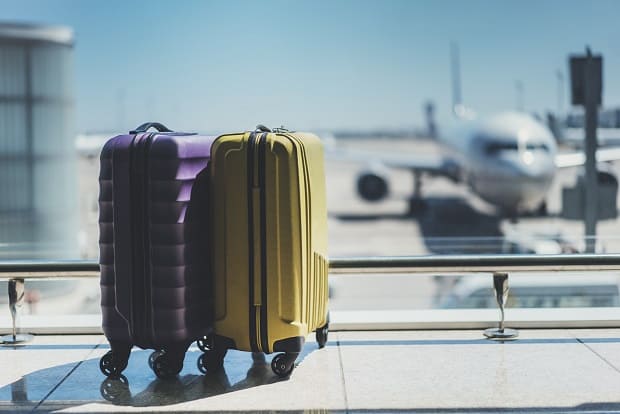
What students should bring on their first trip to Japan
This is not a definitive checklist for what students should bring on their first trip to Japan, but a summary of experiences from those who have gone before — a basic minimum to consider.
1. Luggage
Weight allowances vary by airline, but typically fall within 20kg–46kg for checked baggage and 7kg–10kg for carry-on.-
Checked baggage: split into two suitcases within the total allowed weight.
-
Carry-on: keep it compact for easy movement, and bring a smaller handbag for personal items and documents needed at the airport and during the flight.
2. Documents
-
Passport and plane ticket: obviously needed for departure.
-
Letter of admission: as required by each Japanese-language school.
-
Diploma, transcripts, and academic records for your highest level of study in Vietnam (university, college, high school, etc.); a temporary graduation certificate if your official diploma has not yet been issued.
-
ID photos: around 5–10 photos (3cm x 4cm) taken within 1–2 weeks of your flight. You can also print self-taken photos at コンビニ (convenience stores) after arriving in Japan. References:
> [https://youtu.be/xWLhLry0wjc](https://youtu.be/xWLhLry0wjc) > [https://youtu.be/hkqTK2NsBxs](https://youtu.be/hkqTK2NsBxs) -
Driver’s license: make sure it’s the plastic-card (PET) version; convert to a PET card in Vietnam first if needed.
3. Money Bring some cash, scaled to your circumstances, to cover the period while you look for part-time work.
4. Phone Bring an unlocked international phone if you can — it saves on SIM-registration costs in Japan. Otherwise, any phone that connects to Wi-Fi will do (Japan has many free public Wi-Fi spots).
For more reference:
> https://youtu.be/dMynu0BF3LE
5. Medicine
-
Any specific medications you rely on in Vietnam — for example, stomach or digestive medication.
-
A small supply of cold, fever, and pain relief medicine, plus berberine if you’re prone to stomach trouble while adjusting to new food.
6. Clothing
-
One áo dài for women; one set of trousers and white shirt for both men and women. Buy your suit in Japan — it’ll fit Japanese standards better and is often cheaper than in Vietnam.
-
Don’t pack too many everyday clothes, summer or winter wear: you’ll find affordable, weather- and fashion-appropriate clothing in Japan.
7. Footwear
-
1 pair of dress shoes for your suit.
-
1 pair of sandals.
-
2 pairs of sneakers.
8. Food The thing to bring most of is instant noodles (the more, the better). Then seasonings: fish sauce, soy sauce, chili sauce, sweet soy paste, satay, five-spice powder, etc. — all carefully wrapped and sealed.
Important: items that cannot be brought into Japan include:
-
fresh or dried fruits and vegetables
-
eggs, milk, meat, and meat products such as sausages, pork floss, or Chinese sausage
For further reference:
We hope these tips help you pack well and start your study-abroad life in Japan smoothly.